Welcome To My Blog
Read the latest blogs here to learn something new, hear about latest industry trends or research, or simply be entertained! If anything strikes a cord, get in touch, I'd love to hear from you.
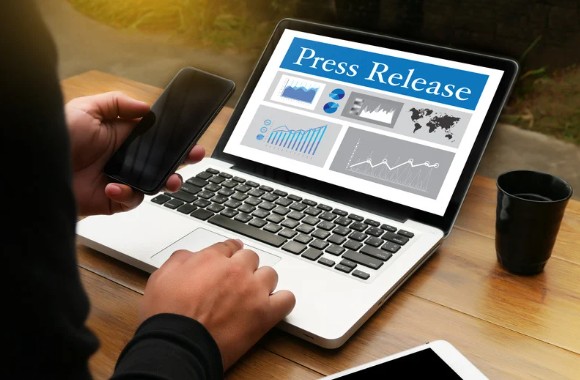
How to write an AI-optimised press release
Why Experts Need to Write Press Releases Optimised for AI
You’ve probably noticed how AI tools are changing how we find, read, and even write information.
Search results are now often summarised for us by AI and tools like ChatGPT, Copilot and Gemini are trained on credible sources. And guess what one of those sources is?
Press releases.
They’re no longer just for journalists. They’re for algorithms now too.
Which means how you write them matters more than ever... (and yes, there is a template for you to download at the end of this blog!)
The Press Release Has Quietly Become a Power Player in AI Search
When you publish a press release, you’re not just announcing something, you’re feeding reliable data into the digital ecosystem.
AI systems use that data to answer people’s questions, generate articles and populate summaries. If your release is formatted clearly, written naturally and linked to credible sources, it becomes a trusted reference for both journalists and machines.
But if it’s vague, full of jargon, or poorly structured, it’s likely to be ignored... by both.
First - What Is an LLM?
LLM, as I’m sure you know, stands for Large Language Model. It's a type of AI that learns by reading and understanding billions of words from across the internet - from news sites, reports, blogs and press releases.
When someone types a question into an AI chatbot or a search engine that uses AI summaries, the model scans what it’s read before to pull together a clear, factual answer.
So if you’re an expert and your release is written well, your content could be the one that AI references or summarises.
That means more reach, more visibility, and more credibility.
Why This Refresh Matters for You
Traditional press releases were written for journalists but today, as an expert, your audience is twofold:
Humans: journalists, editors, producers, potential clients.
Machines: AI tools and search engines that decide what gets seen.
By tweaking your format slightly, you make it possible for both to recognise your story as credible and relevant.
This isn’t about “gaming” AI. It’s about writing smarter so your expertise doesn’t get lost in translation.
Bonus: The SEO + AEO Advantage
If you’ve ever thought of SEO (Search Engine Optimisation) when writing press releases, it’s time to take it one step further with AI-driven search called AEO - Answer Engine Optimisation.
Here’s the difference in plain English:
SEO is for search engines like Google: helping your content rank higher in traditional search results.
AEO is for AI tools like ChatGPT, Gemini and Copilot: helping your content be used, cited or summarised in AI-generated answers.
Press releases used to be a side note in SEO - mostly for backlinks. Now they sit right at the centre of both SEO and AEO.
A clearly structured, keyword-rich release helps:
Google recognise it as newsworthy and indexes it in Top Stories
AI tools pull it into summarised answers or reports
In short: SEO gets you found. AEO gets you featured.
What’s Changed in AI-Optimised Press Releases
Here’s what’s new and why it matters:
Headline & Subhead: Include your main keyword or topic clearly so both AI and readers instantly understand what the story is about.
Date & Location: Always include a dateline (City, Date). It adds credibility and context.
First 50 Words: Write your opening as a mini-summary. AI gives extra weight to this section.
Language: Use simple, natural, jargon-free writing. AI(like journalists)prefers clarity.
Structure: Follow a predictable format: headline ➡️ lead ➡️ detail ➡️ quotes ➡️ boilerplate. This helps AI understand your layout.
Links: Add both internal and external links to credible, relevant sources. AI checks them to verify facts.
Captions: Always include captions for images and videos. They help AI understand your visuals.
What to Include in Every Press Release for AI Search
🎯A clear, keyword-rich headline
🎯A dateline (City, Date)
🎯 A lead paragraph summarising the story in under 50 words
🎯 Subheads and short paragraphs
🎯 Quotes that sound human, not corporate
🎯 Links to credible sources
🎯 Captions for all media
🎯 A consistent boilerplate and contact details
Think of it as making your release machine-readable without losing your human touch.
The Takeaway
Press releases have quietly evolved into one of the most powerful tools for visibility across both media and search.
If you’re still using a pre-2020 format, it’s time for a refresh because now, your press releases aren’t just being read, they’re being interpreted by AI and that means we need to change our approach.
Get the Free Template
To help you update your process, I’ve created a new AI-Optimised Press Release Template complete with prompts, examples and a checklist you can follow step-by-step.
Download your free copy here to make sure every release you write is structured for journalists and the AI systems that amplify your story.
